Finops Mission impossible?: AZURE AI Services cost + Foundational models cost such as GPT-4, LLAMA2 or Mistral (I)

Gallery

This gallery contains 7 photos.

Did you realize Microsoft is involved in a frenetic evolution of their AI services?.Old AI services such as “Luis” or QnMaker are now label as Classic, new LLM (Large Language Models), those which speak with you, as GTP 4.0 or … Continue reading

FINOPS, Our Cloud Guidance to Cost harmony – MICROSOFT Approach (II)

Gallery

This gallery contains 11 photos.

Do you want to speed up your Finops practice on Azure?. Here we follow our last post with some simple approaches to allocate cost. Today, we have some nice workarounds and most important very effective to understand our cloud spending. … Continue reading

FINOPS, Our Cloud Guidance to Cost harmony – MICROSOFT Approach (I)

Gallery

This gallery contains 15 photos.

Microsoft started his journey to FINOPS as a Premium Founder Member in February 2023. Many IT professionals figured out if this culture and methodologies to leverage cost efficiency would bring value on Azure. After some months the question has a … Continue reading

AMAZON S3 versus Sharepoint Online – Godzilla versus Hulk ( Part II)

SharePoint Online brings a tremendous environment of collaboration to your users. When you are working with partners or employees of your own company located in several subsidiaries in your country, this is the best in class approach.

But what is a file storage service?

A file storage service is a type of online service that allows users to store and access their files over the internet with security and appropriate authorization. Users can upload, download, share, and synchronise their files across different devices and platforms.

Drivers to configure and deploy SharePoint are:

  • Provide easy and convenient access to files from anywhere and anytime.
  • Enable collaboration and sharing of files with others.
  • Reduce the need for maintaining physical storage devices and infrastructure.
  • Offer scalability and flexibility to adjust the storage capacity and performance according to the user’s needs.
  • Improve user´s mobility and remote work.

So when should i use Sharepoint?

SharePoint is a really powerful solution for collaboration, document process automation, content search, etc.

Sharepoint focus on the following scenarios:

  • Collaboration solutions with other employees and partners using folders in a structured hierarchy with appropriate permissions.
  • Intranet to provide current company information such as events, regulations, standardise forms, etc.
  • Search data such as expertise within the company, projects, people profiles, documents, etc.
  • Automate processes integrated with IA (together with MS Syntex)
  • Manage document workflows between departments and document life cycle.
  • Synchronise collaborative data on your laptop to work at your own pace if needed
  • Business Intelligent platform

To sum up, SharePoint can offer lots of advantages to your collaboration scenarios.

Enjoy the journey to the cloud with me…see you soon.

AMAZON S3 versus Sharepoint Online – Godzilla versus Hulk ( Part I)

I´ve read a lot and heard about Amazon S3 and SharePoint Online competition. Face to face, many companies think one is the best than the other. Even i had to listen a comment from a Microsoft guy saying clearly and loudly, SharePoint was quite better solution than Amazon S3.

To be honest, it depends on what kind of scenario are you figuring out. Each company has an explicit need that use to fit with one or the other.

Amazon S3 is an object storage service that offers industry-leading scalability, data availability, security, and performance. This means customers of all sizes and industries can use it to store and protect any amount of data for an specific region as this solution is global, for a range of use cases, such as data lakes, static websites, backup and restore or even archive data, enterprise applications, store IoT logs, and big data.

But what is an object storage?

An object storage is stored in a “flat” address space. Each stored object has a unique identifier and a metadata link that makes it easy to find among thousands of other objects. There is no hierarchy with several folders at all.

This approach improves latency, performance and solve scenarios with data such as x-ray images of patients in a hospital or TIFF files used for maps in a graphic Design Studio.

Drivers are the size for that data, format of files, store such data for a long time, latency to access that data and throughput within a time window to get all the information quickly as possible.

So when should i use Amazon S3?

S3 is global and has Edge Locations which are endpoints in several countries caching content. There are several flavours from S3 Standard to S3 Glacier deep archive depending on your company policies, performance and latency needed, resilience, etc.

Amazon S3 is very flexible as you can even use features such as:

  • Life cycle Management
  • Versioning
  • Encryption
  • Protect your buckets (where you classify your data) with ACL and compliance policies

Tu sum up, Amazon S3 covers lot of customers scenarios. Most very critical in terms of latency, or performance. It is a global solution to work with. Even you can pay a little bit more for Amazon S3 Transfer Acceleration which you can enable for a bucket when needed,and it speeds up data exchange with this bucket up to 6 times.

In the coming post, i am going to deep dive on Sharepoint Online and best scenarios for this Microsoft cloud solution.

Enjoy the journey to the cloud with me…see you soon.

FIRST FIVE MYTHS AND LEGENDS ABOUT FINOPS

The first definitions of FinOps as such, arise during the period of 2018 – 2020 to consolidate as a framework or financial culture in the cloud world and be sponsored by the FinOps Foundation.

Today there are more than 10.000 FinOps practitioners and more than 80% of enterprises in US are looking for a way to work, a financial culture, to allocate cost and understand the OPEX challenges that public cloud brings up.

In EMEA, we are getting on slower. Countries such as UK, France, Germany, Italy or here in Spain expect a strong expansion of FinOps culture in their companies (even SMB) as well as public sector.

But why is there so much confusion about what objectives this framework has?. Well, to be honest, there are a few misunderstandings that have led to this situation.

Finops is something we are still doing, we are using RI, we usually resize VMs and delete Orphants elements, even we are doing tagging properly

Cloud Economics, all related to optimize cloud spending with our engineers from a technical perspective, is part of Finops. Indeed, there is a capability called “Resource Utilization & Efficiency” and another called “Workload Management & Automation” that cover those scenarios when we need to optimize a cloud or multicloud environment.

Finops is just about save money and reduce cloud consumption

Finops is a culture to integrate Financial team, IT Engineers, procurement, PMO and CIOs and broke silos in order to allocate cloud cost, understand the appropriate cost metrics and ROI for each business or motivations to invest in the cloud. It is about being cost – effective, not just about save money.

Finops doesn´t make sense. It doesn´t provide any value to our business

Some roles as CTO, Engineers, some IT managers don´t see any value in a framework such as Finops. They think it´s too much “High Level”, maybe a fashion. It´s remarkable, they are technical people and don´t see technologies are needed to support a business. We have to pointed out here, public cloud ends up in caos if you don´t understand how to manage cloud cost in a new OPEX world.

When we buy a Cost Management Console, we will be moving faster to a RUN phase within FINOPS

This is not the approach, if you buy a cost console tool such as Cloud Health, Cloudability or whatever in the market, this is just a tool, you need to adapt to your cloud provider or multicloud solution together with governance, automation, forecast, budget strategies, etc.

If you have a FINOPS Team and you have applied some Finops principles, follow up stages, use a cost management console with some reports, you are done.

This is the start of a journey. Even if you set up a FINOPS TEAM, and you think you are on the way to a RUN stage, you need to be sure, your CEO and executive staff push down this culture, you need to be sure you have appropriate business metrics and the cost allocation and owners are part of your company culture. This is a cycle of cost effective optimization.

In the coming post, i am going to underline more confusing concepts about FinOps and deep dive in the possibilities that this framework provides to Finance and CFO´s roles.

Enjoy the journey to the cloud with me…see you soon.

HOW TO PROVIDE GOVERNANCE ON AWS FROM AZURE? A HOLISTIC VIEW

Hybrid cloud is a big challenge for mostly all the companies out there. They need to integrate their on premise workloads and cloud native solutions with similar governance, security posture and devops for instance. Some solutions can use more or less VMs, Microservices, Data analytics, ETL. But what happens when you want to use AWS as well as AZURE and obviously you need a single pane of glass to provide a holistic view of your multicloud environment?

Are there technologies to solve such a mess?. Let try to be focus laser on the big pain points to cope with:

  • Your IT team has a solid knowledge in Azure but very limited to AWS
  • You want to achieve a governance to services and IT solution as a whole even if workloads are spread between both clouds
  • AWS account are isolated with no landing zone as they are inherited from previous merged o company acquisitions.

Here you can see a Lab where i was testing VMs on a AWS account with visibility on my Azure ARC console.

Tagging and cost control: If you want within Azure ARC you can edit tags to some VMs on EC2 and build a unique perspective to a IT service for VMs even if they are located in a multicloud environment. So from you favourite cost management console, Azure cost management, you can connect to AWS and speed up your multicloud FINOPS strategy.

Standardization  for Policies and Governance: Linux or Windows VMs on EC2 can be managed exactly in the same way as you are working with VMs on Azure or on premise. Your Azure Policies will address all the issues regarding permissions, compliance, authorization to resources, etc. The best point, it doesn´t matter if they are on Azure or AWS.

Working with Microsoft Defender Anywhere: Azure ARC provides an agent to be deployed in some VMs so you can afterwards set up specific iniciativas to active and to roll Microsoft Defender for Endpoint. Taking into account that you will receive all the antimalware alarms and security tracking in the same console.

Another approach would be to register and deploy EKS from Azure ARC so you can provide governance to AWS kubernetes cluster from the Azure ARC console. Something quite interesting to those who has a strong knowledge on AZURE but want to deal with AWS as well.

I hope you enjoy this post. See you in the cloud.

CLOUDMANJI !! – WHEN YOU WORK IN FINANCE AND ALL AROUND YOU IS OPEX

The drums are beating, can you hear them?. But I don’t know where the sound is coming from. It’s thunderous, ringing in my ears…boom,boom…pause,..boom,boom. Like elephant heartbeats…

It is Cloudmanji!. A game that I don’t like to play as a financial manager, as a specialist in the purchasing department although i have been invited without wanting to attend that appointment.

OPEX is all around your work. It´s a new jungle where CAPEX is coming off the board. You are buying software subscriptions, Software as a Service (software that you can consume but you don´t need to install or maintain), Cloud infrastructure as PAYG (Pay as You Go), software products within the marketplace of your favourited Hyperscale. Moreover, others are buying, likely someone in the IT department, those software solutions and you just received invoices with not explanations at all.

Therefore, there are “Silos” in your company where not everybody is aligned about cloud spending or maybe the cloud adoption framework was rolled out to be focused on some “Personas” and business areas but not all stakeholders that should be involved in cloud projects.

First beat of drums

Cost Spike in the top one. This kind of scenario usually comes out of “Data Analytics” or “Big Data” Labs or Proof of concept aimed to analyse some specific information in order to take quick business decisions. Sponsor could be HR, Marketing or PMO directly. CIO is aligned with those guys, but he can´t figure out what comes next.

Sometimes happens because a junior consultant is responsable for deploying the prototype infrastructure on AWS, Oracle cloud or Azure as he just follows a default configuration which in many cases means to choose a “Premium Tier” for storage or data bases. Adding to that, there was no governance at all regarding what IT guys can do or can´t do.

The outcome is an unexpected invoice to Finance which means a spot in the budget for the big fish companies and a “cash burn out” for a small one or for a Startup.

The CFO wants to cut heads and he doesn´t know where to start. Who was guilty?, if any?, Who did the things wrong?. Where to start to fire up your team and see the cloud as an alliance?.

Second beat of drums

In the top two, an orphan and shared cost for the company, expensive and necessary, a cost which nobody wants to be assigned in their cost center code.

How do you split this kind of cost for several departments or countries?. Let´s say, you have several factories in your country, four in France, and even worst, two more in Spain, one in Portugal and UK. Due to the brexit and the currency things get extraordinary complex as you need to invoice in Euros and Pounds. There are also withholding taxes between Europe and UK.

You started with an application modernization strategy and migrated legacy applications to Azure. Application refactoring, (changing code and decoupling of architecture in small pieces called microservices) improved the deployment and scalation on demand to all those factories, supplying a quick and effective support for assembly line modifications.

All the factories need that cloud infrastructure and it´s critical and means a shared cost to all of them. It´s a complex cost which you can´t estimate properly. A Production, preproduction and development deployed in a multi-region approach. UK says France should pay the bill as they are the head quarter. Spain and Portugal say they can´t pay the bill as they have a smaller market than others and less profitable. France says cost should be splitted into euros (hence they pay France, Spain and Portugal) and into pounds. They say UK pays their factory in pounds and assumes all related to Brexit as withholding taxes.

How do you allocate cost in the cloud for such infrastructure?. How to estimate the appropriate average consumption for each factory?. How do you align Finance, IT guys and the Board to be on the same page and work together to find out a solution?

Third beat of drums

A company jumped into the cloud. They migrated three on premise data centers on premise. No cloud adoption was put on the table ended up in a bunch of solutions with no adequate scalation, security issues and no governance or cost allocate at all. A caos or nightmare that each new CIO has to cope with.

Not to mention, the company has workloads in two different hyperscalers. For instance, GCP and Azure.

After four CIOs and two CISOs went through the company, who is in charge of this scenario?. Finance says the situation is terrifying and horrible. No clear budgets, no budget alerts, no cost allocation, etc. How to deal with OPEX?.

To sum up, these scenarios are covered by FINOPS. This is a methodology where you are going to work with the IT cloud engineers, the CIO, your devops team, your Purchase department, Finance, PMO and some skilled people called Finops specialist.

In the next Cloudmanji episode, i´ll explain what it´s all about this approach and how you can leverage the methodology to deal with all these situations.

Dear CFOs, purchasing managers and IT guys enjoy the journey to the cloud with me…see you then in the next post.


MARKETPLACE: AN EXCLUSIVE AZURE & AWS SHOPPING CENTER – PART II

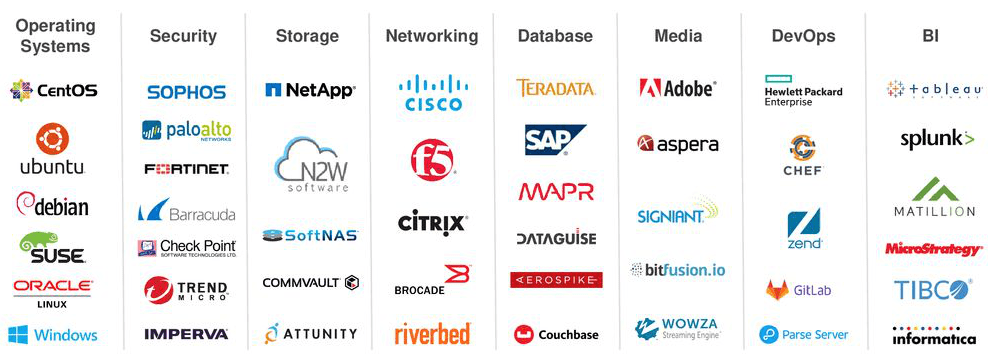
When you take a look to AWS, you can smell the origin of their public cloud strategy and why you can buy thirty-party technology solutions such as Palo Alto Firewalls, Linux Red Hat or SUSE VMs with lots of applications, or even Cisco or other network providers products. As you know, marketplaces are nothing else than platforms which enable transactions between customers and thirty party sellers.

Jim Collins identified the term “flywheel effect” and explained the concept to Jeff Bezos who saw an incredible opportunity where other people would have seen just a methodology without options to survive.

The idea is simple. Create a virtuous cycle that increases the number of sellers who offer their products and services, which therefore, increase the amount of offers and prices of those products or services so it´s more interesting to the users in order to find exactly what they want with the right prices.

Hence, improves the traffic to the platform and drives more sellers and customers to buy there. Moreover, you reduce prices to users, and they are used to visit your platform or marketplace from time to time.

From Amazon to AWS (Amazon Web Service) Marketplace

AWS marketplace was the first cloud marketplace for Hyperscalers AWS started the journey to sell thirty party IT products and services following in the footsteps of Amazon platform.

Customers can buy thousands of ISV products and services to deploy with agility and just for testing or find out if a specific software make sense and fill the gap in their company.

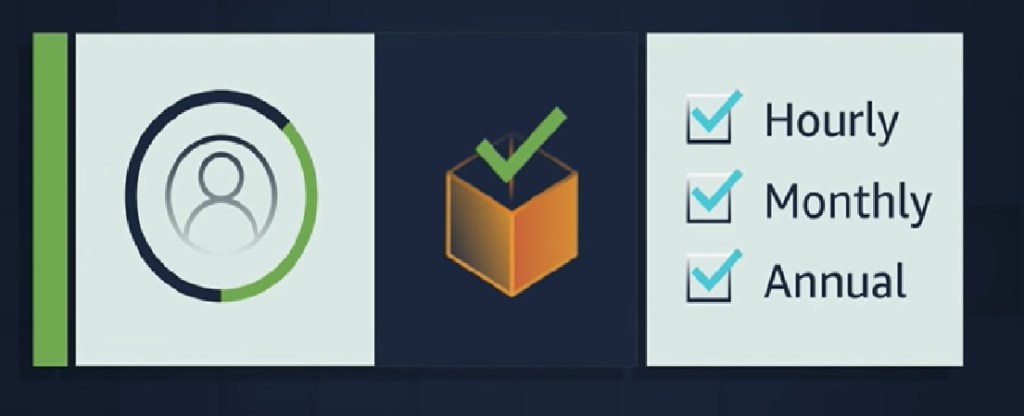
There is flexibility of prices, offer terms and conditions. There are pricing plans with an annual approach for 12 months subscriptions or even for just one month if you need for example to roll out a POC. there are others such as usage pricing where customers just pay for what they use in a PAYG approach or pricing models for specific product delivery methods such as containers or ML.

It is very flexible as you can buy even professional services product prices which are in general offerings of professional services packages. All the offers can be tailored for your target company if you are an AWS partner, and you can access to public or even private offers if you are a customer to leverage better discounts or improve some aspects of the ISV product or the consultancy company you deal with.

Lots of solutions are waiting for you…

You can make plans for some offer types publicly available or available to only a specific (private) audience. Likewise Azure marketplace we have explained in the previous post and follow up the same marketplace strategy as AWS did.

In summary, if you are figuring out which value can bring an ISV to your business on the cloud, and you want to leverage some AWS partner professional services in a specific area as cybersecurity or SAP, if a chance you should not forget.

Enjoy the journey to the cloud with me…see you then in the next post.

MARKETPLACE: AN EXCLUSIVE AZURE & AWS SHOPPING CENTER

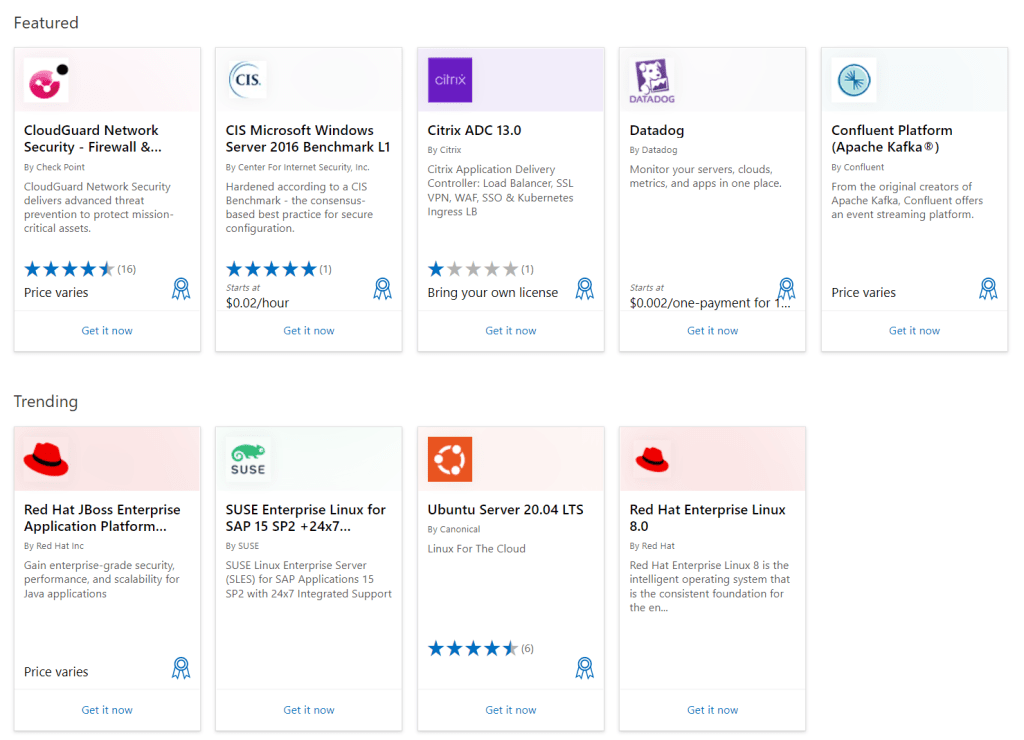
When you, as a user, access your Azure Portal or AWS portal, you have the option to buy thousands of products or solutions preconfigure for you. You don´t need to worry for the licences or the IT capabilities to design or deploy an specific solution as there are all build following customer needs for several AWS or Microsoft partners and ISV (independent software vendors).

We will speak about the AWS marketplace later, in a new post. Just to pointed out, it was launched in 2012 to accommodate and foster the growth of AWS services from third-party providers that have built their own solutions on top of the Amazon Web Services platform such as ISV, SI (System Integrator) an resellers so the customer would buy exactly what they needed and when they needed adding a tremendous flexibility to grow their cloud solutions aligned with the business.

In the case of Azure was launched in 2014, it is a starting point for go-to-market IT software applications and services built by industry-leading technology companies.The commercial marketplace is available in 141 regions, on a per-plan basis.

What are the plans and how to use them (as a Partner)?

Microsoft partners can publish interesting solutions which involve licenses and services together within the Azure Marketplace On one hand, you don´t need to acquire licenses which prices are prorated within the price. On the other hand, you have access to expertise without hiring new employees in you IT team.

A plan defines an offer’s scope and limits, and the associated pricing when applicable. For example, depending on the offer type, you can select regional markets and choose whether a plan is visible to the public or only to a private audience. Some offer types support an scope of subscriptions, some support price related to consumption, and some let a customer purchase the offer with a license (BYOL), they have purchased directly from the publisher. 

Offer typePlans with pricing optionsPlans without pricing optionsPrivate audience option
Azure managed application
Azure solution template
Azure container✔ (BYOL)
IoT Edge module
Managed service✔ (BYOL)
Software as a service
Azure virtual machine
  • Markets: Every plan must be available in at least one market. You have the option to select only “Tax Remitted” countries, in which Microsoft remits sales and use tax on your behalf.
  • Pricing: Pricing models only apply to plans for Azure managed application, SaaS, and Azure virtual machine offers. An offer can have only one pricing model. For example, a SaaS offer cannot have one plan that’s flat rate and another plan that’s per user.
  • Plan visibility: Depending on the offer type, you can define a private audience or hide the offer or plan from Azure Marketplace.

How to publish and what kind of visibility can we provide (As a Partner)?

You can make plans for some offer types publicly available or available to only a specific (private) audience. Offers with private plans will be published to the Azure portal.

You can configure a single offer type in different ways to enable different publishing options, listing option, provisioning, or pricing. The publishing option and configuration of the offer type also align to the offer eligibility and technical requirements.

Be sure to review the online store and offer type eligibility requirements and the technical publishing requirements before creating your offer.

To publish your offers to Azure Marketplace, you need to have a commercial marketplace account in Partner Center and ensure your account is enrolled in the commercial marketplace program.

Also if your offer is published with a private plan, you can update the audience or choose to make the plan available to everyone. After a plan is published as visible to everyone, it must remain visible to everyone and cannot be configured as a private plan again.

Finally, as a partner can enable a free trial on plans for transactable Azure virtual machine and SaaS offers.

For example, azure virtual machine plans allow for 1, 3, or 6-month free trials. When a customer selects a free trial, we collect their billing information, but we don’t start billing the customer until the trial is converted to a paid subscription.

What are your benefits when using Azure Marketplace (As a User)?

Marketplace brings flexibility to customers as they can buy immediately any kind of offer based in a plan which provide several products from thousands of ISV without losing time to deal with any vendor or understand in detail the support model or licensing options.

In the Azure portal, select + Create a resource or search for “marketplace”. Then, browse the categories on the left side or use the search bar, which includes a filter function and choose what you need..

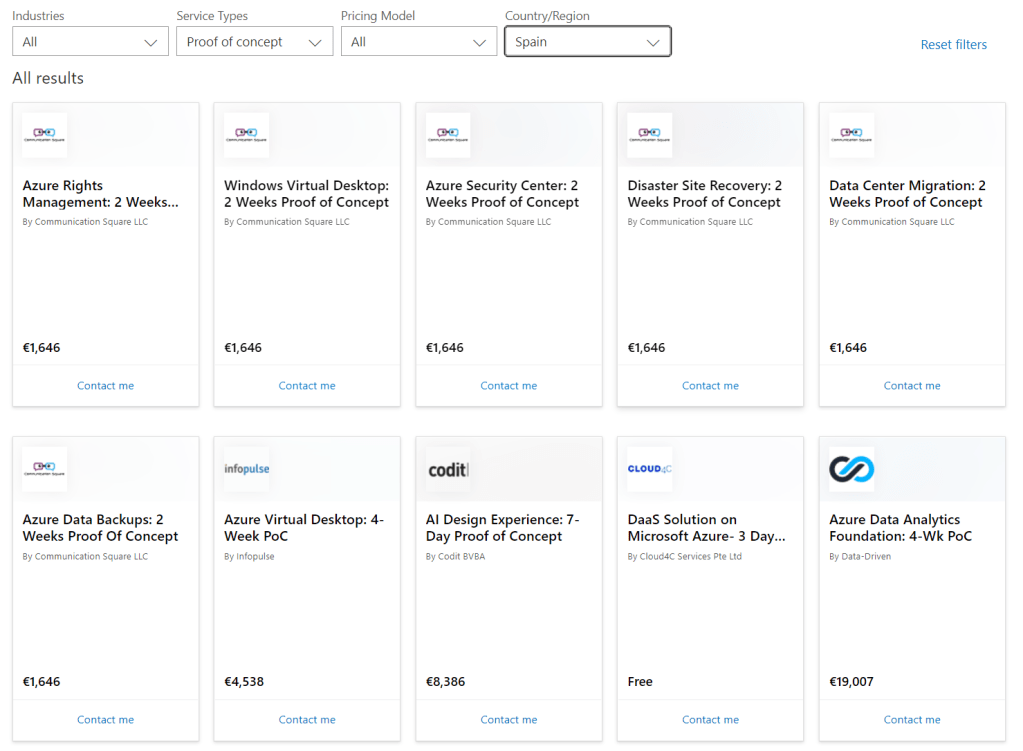
Likewise, there are lots of consultancy services provided from several Microsoft partners, some of them as a free trial so you can test the quality of their professional services and see their approach to fix your pain points.

Enjoy the journey to the cloud with me…see you then in the next post.